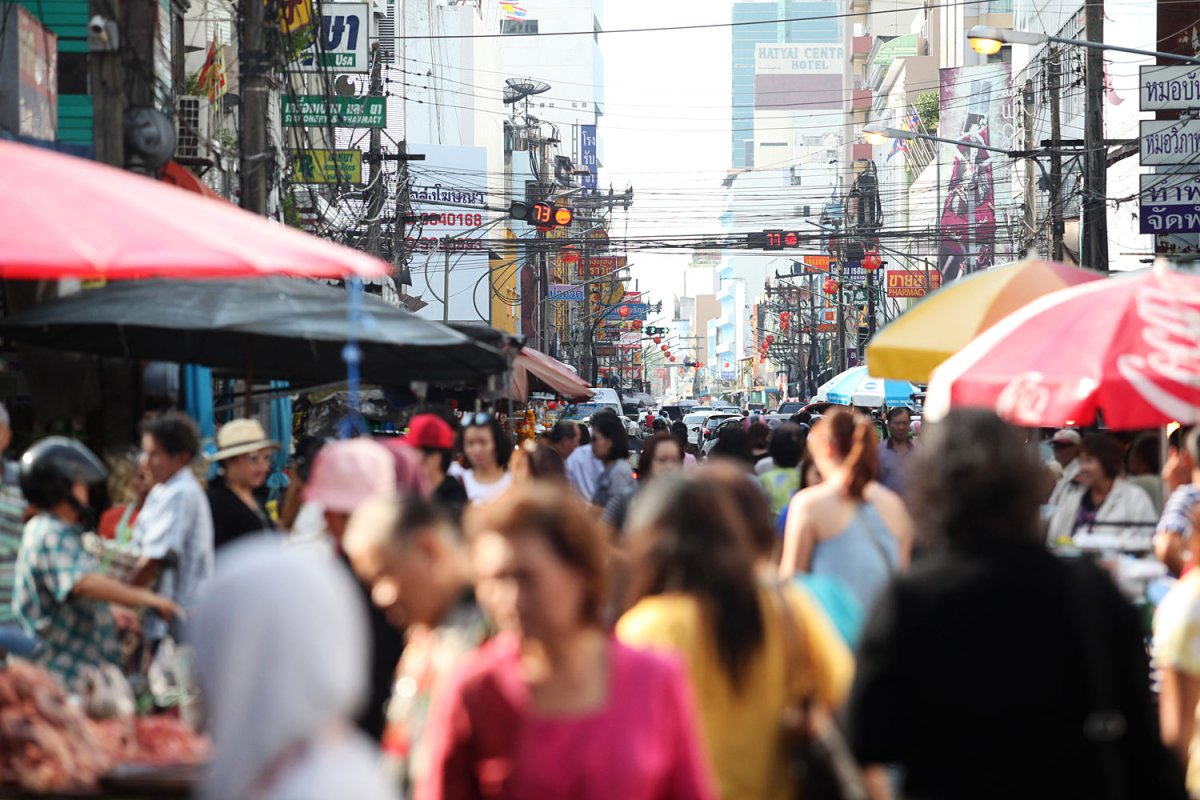
The global consumer landscape is being reshaped by the rapid expansion of the middle class, particularly across Asia, giving rise to a new consumption story defined not just by growth, but by selectivity and shifting priorities.
By 2030, the global middle class is expected to exceed five billion people, with Asia accounting for nearly two-thirds of total middle-class consumption. Southeast Asia is a key contributor to this expansion, supported by urbanisation, rising incomes and increasing digital penetration.
However, this growth is not translating into a uniform consumption wave. Instead, it is producing a more discerning and value-conscious consumer.
Today’s middle-class consumer is highly digitally connected, with over 80% of Southeast Asians online and penetration exceeding 90% in Thailand, shaping how consumers discover, evaluate and purchase products. At the same time, with Thai household debt close to 90% of GDP, they remain financially constrained, while becoming increasingly value-driven amid post-pandemic inflation.
As a result, a dual consumption pattern is emerging: consumers are trading down on everyday essentials while selectively trading up in priority categories such as health, education and personal care.
PREMIUMISATION
Premiumisation has evolved beyond traditional luxury into a broader, more nuanced consumption pattern. Globally, premium segments in consumer goods are growing approximately 2 to 3 times faster than standard segments, reflecting a shift towards quality, functionality and trust.
In practice, consumers may reduce spending on basic goods while choosing premium skincare, functional foods, or higher-quality convenience products. The decision is less about status and more about perceived value. Products that offer health benefits, durability or superior performance are more likely to justify a higher price point.
Healthcare represents the most significant area of premiumisation. Global healthcare spending is projected to grow at approximately 5–7% annually through 2030, outpacing overall economic growth. In Thailand, private healthcare continues to expand, supported by strong domestic demand and a medical tourism sector generating billions of dollars annually.
Consumers are increasingly shifting from reactive treatment to preventive care, investing in diagnostics, wellness services and health-enhancing products. Consumption is being redefined as an investment in long-term outcomes rather than immediate gratification.
THE ‘INVESTOR CONSUMER’
Digital financial inclusion is transforming how consumers participate in the economy. Across Southeast Asia, a majority of adults now have access to digital financial services, supported by the rapid adoption of mobile wallets and real-time payment systems. In many urban markets, e-wallet penetration exceeds 90%, enabling seamless transactions and deeper integration with e-commerce.
This increased access has expanded purchasing power, particularly among previously underserved populations, but it has also introduced new financial behaviours. One of the most significant shifts is the rise of the “investor consumer”.
Retail participation in financial markets has increased markedly in recent years, driven by mobile trading platforms and lower barriers to entry. Younger consumers are allocating a growing portion of income towards equities, digital assets and alternative investments.
This represents a structural shift in consumption patterns. Spending is no longer the default use of disposable income. Instead, investor consumers are balancing consumption with wealth accumulation, evaluating purchases against alternative uses of capital. This dynamic increases scrutiny on spending decisions and reinforces the importance of delivering clear, tangible value.
BRAND STRATEGIES
Global brands are increasingly recognising that success in emerging markets requires deep localisation. The traditional model of scaling standardised products is no longer sufficient in Southeast Asia, where consumer behaviour is shaped by diverse cultural and digital ecosystems.
In Thailand and across the region, platforms such as LINE, Shopee and TikTok Shop play a central role in daily life, integrating communication, entertainment and commerce into highly interactive consumer journeys. Social commerce is particularly influential, accounting for an estimated 30–40% of e-commerce activity in markets like Thailand.
To compete effectively, brands must adapt not only their products but also their engagement strategies. Cultural relevance, localised pricing and platform-native content are essential.
GEOPOLITICAL IMPACT
Geopolitical instability is now a direct driver of consumer behaviour and the ongoing Iran war provides a clear example. The conflict has contributed to volatility in global energy markets. This has led to sustained inflationary pressure, with many major economies experiencing inflation rates at or above 4% in 2026.
For consumers, this translates into reduced purchasing power and greater uncertainty. Households are responding by prioritising essential spending, delaying discretionary purchases and increasing savings.
The broader impact is behavioural. Even among higher-income consumers, there is a noticeable shift towards caution and risk aversion. Value, reliability and necessity are becoming central to decision-making. Geopolitical events are no longer distant macro factors, they are directly shaping everyday consumption.
Thailand’s economic structure makes it both vulnerable to global shocks and well-positioned to capitalise on emerging trends. Its reliance on energy imports and tourism creates exposure to geopolitical volatility, while its strengths in healthcare, food and digital commerce provide a strong foundation for growth.
To navigate this environment, Thai businesses must recognise increasing market fragmentation. The erosion of the middle segment requires a dual approach that serves both price-sensitive consumers and premium demand. This means delivering affordability at the mass-market level while investing in higher-margin segments such as healthcare, wellness and premium food and beverages.
Thailand’s established position in medical tourism creates a clear opportunity to expand into preventive care and integrated wellness services. At the same time, leveraging digital financial ecosystems can enhance accessibility and drive conversion, particularly among emerging middle-class consumers.
In an increasingly fragmented and volatile global landscape, Thailand’s competitive advantage will depend on its ability to align policy, business strategy and evolving consumer behaviour. Those that adapt with precision will not only capture growth, but help define the next era of consumption.
Rewin Pataibunlue is a founding partner and Group CEO at PrimeStreet Group, an investment banking, strategic management consulting and alternative fund management firm based in Bangkok.